



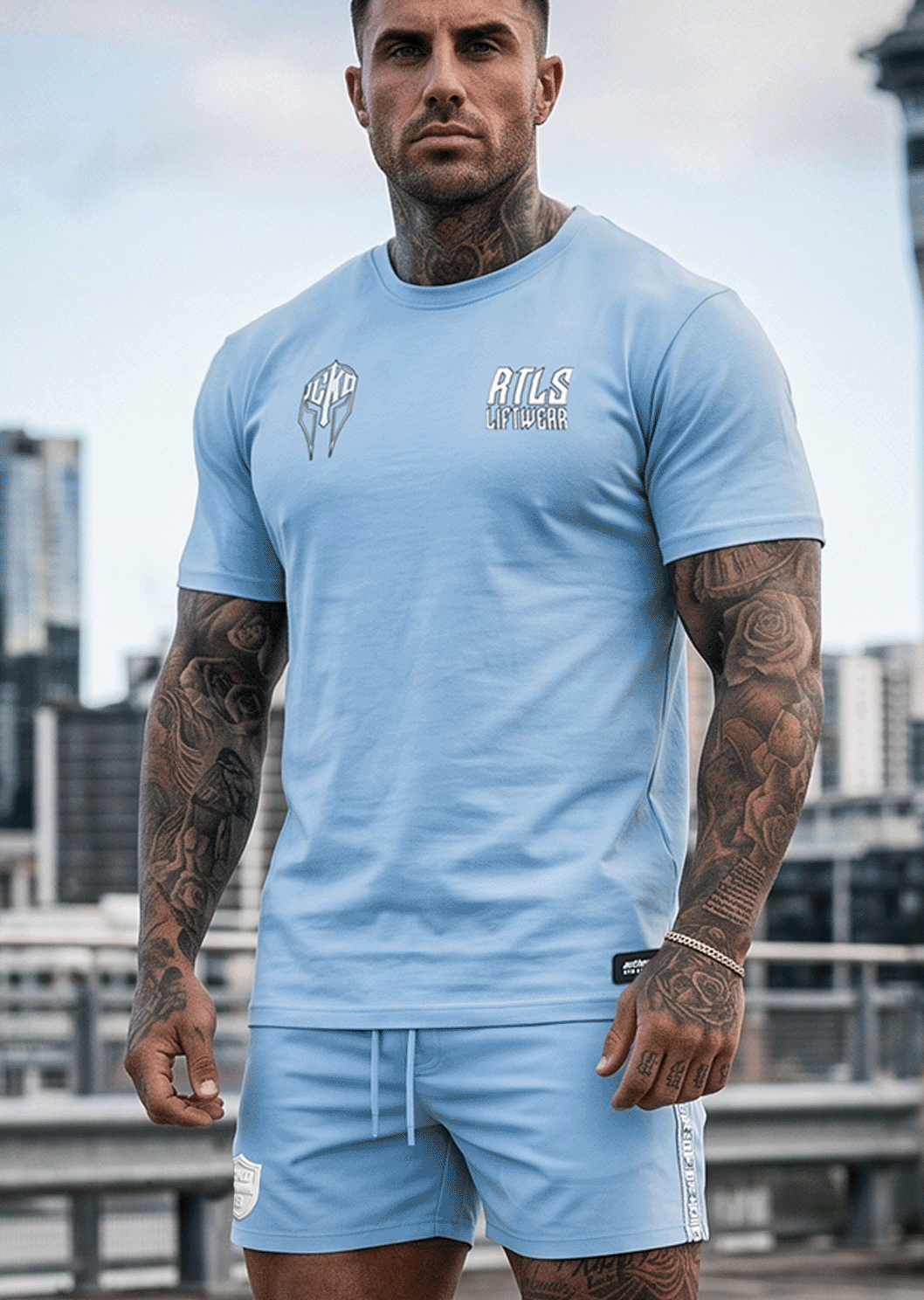
Type "how should a gym stringer fit" into Google and you get two camps shouting at each other. One says a stringer should be painted on. The other says it should hang off you like a bin bag. Both are wrong.
A stringer is a tool with a specific job: get fabric out of the way of your shoulders and back, show the work you've put in, and stay put while you do it. The fit follows from that job.
The short answer
A gym stringer should sit close through the chest, hang loose through the body, and leave the shoulders and lats completely clear. The straps should stay on your shoulders when you raise your arms overhead. The armholes should open low enough to free the lat but not so low that the hem flaps around your waist. If it rides up when you press, it is too small. If the straps slide off your shoulders when you row, it is too wide at the neck or a size too big.
Stringer vs singlet: a different cut, a different fit rule
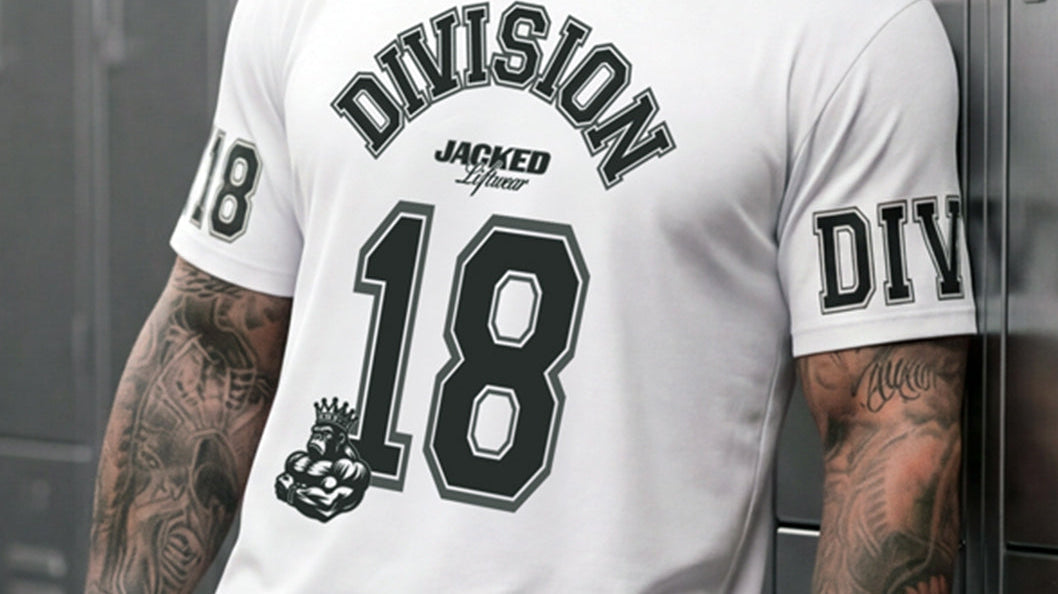
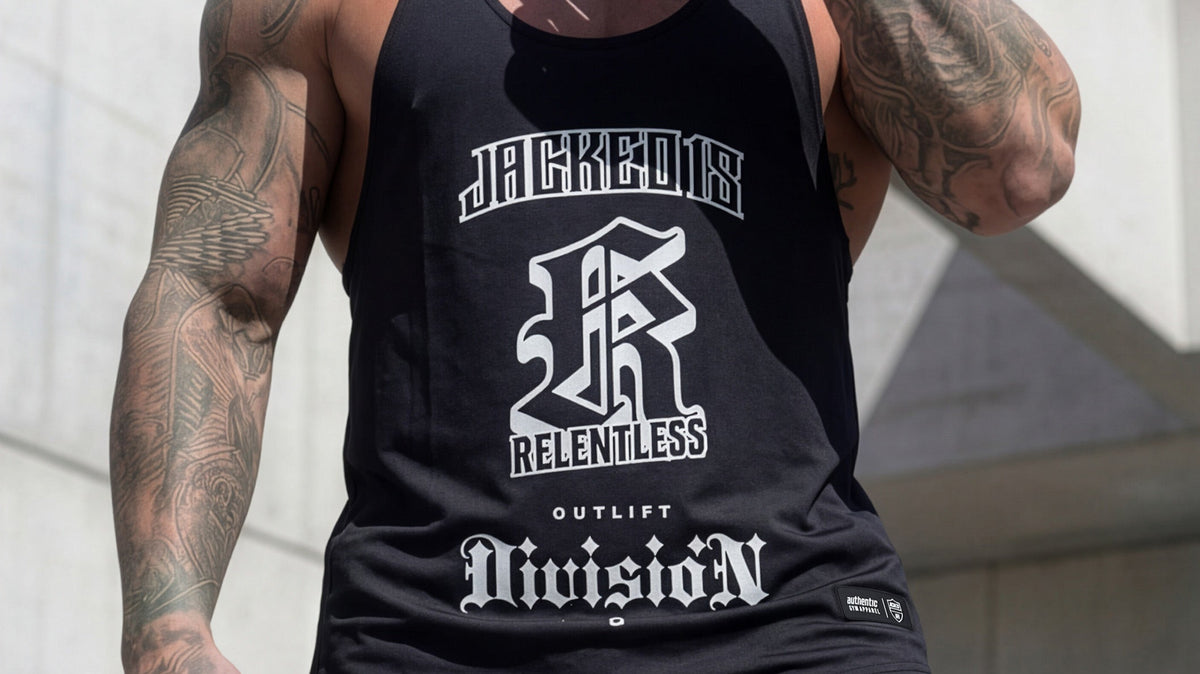
A singlet like our 1018 Relentless is cut with a regular fit, a sculpted chest taper, self-fabric binding at the neck and armholes, and a curved hem, in 150 GSM, 34-singles combed cotton. It covers the chest and most of the shoulder, so it is sized like a lightweight tee.
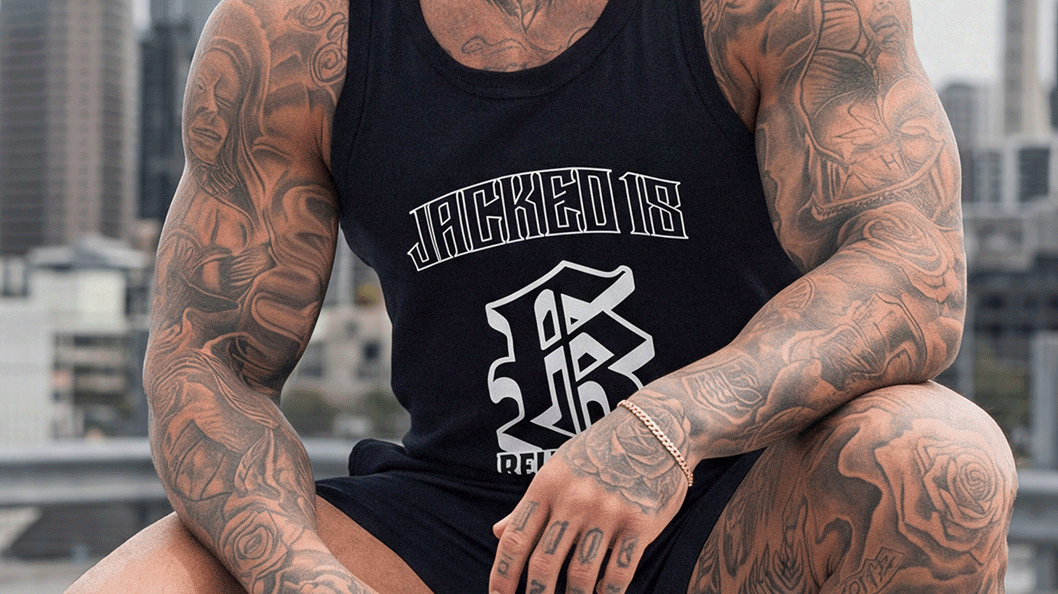
A stringer like the 1018 DIV18 Stringer is a different animal: thin shoulder straps, deep-cut armholes, a racerback, and a sculpted athletic fit in lightweight 100% cotton with slight stretch. There is far less fabric holding it in place, so the fit has to do more work. A singlet that is half a size big still looks fine. A stringer that is half a size big slides around.
If you are not sure which cut suits your training, the singlets and stringers buying guide walks through the three cuts and who each one is for.
The four fit points that actually matter
1. Strap width and placement
Thin straps are the whole point of a stringer, but thin is not the same as loose. The strap should sit on the top of the shoulder, roughly over the middle of the delt, and stay there through an overhead press. A racerback design, which both our stringers use, pulls the straps toward the spine at the back, which is what stops them sliding outward when you go wide on a row or a pulldown. If the straps on a stringer sit on the outer edge of the shoulder at rest, they will fall off under load.
2. Armhole depth
Deep armholes free the lat and let the serratus show on a press. The test is simple: stand sideways to a mirror and raise your arm to shoulder height. The armhole should open to somewhere between the bottom of the pec and the top of the oblique. Lower than that and the hem rides up all session. Higher than that and you have bought a singlet with thin straps. On the 1018 Relentless Stringer the deep arm cuts are paired with a scoop bottom hem so the fabric still hangs clean at the waist rather than bunching.
3. Chest taper
Both our stringers use a sculpted chest taper, which means the panel narrows from the chest toward the waist instead of running straight down. On a built frame this is the difference between a stringer that follows the V shape and one that hangs like a box. You want the chest panel to sit flat against the sternum without pulling across it. If the graphic distorts or the fabric stretches tight across the pec at rest, go up a size.
4. Length and hem
Stringer length should land at the hip bone or just below it, long enough to tuck if you want to but not so long it covers the waistband of your shorts. A stringer has no sleeves to anchor it, so a long body swings and catches on the bar. A scoop bottom hem helps because the front and back sit lower than the sides, which keeps coverage where you want it while letting the sides sit high and clear.
Should a stringer be tight or loose?
Neither, and the mistake people make is applying one word to the whole garment. The chest should be close. The body should be relaxed. The straps and armholes should be clear of the shoulder joint. A stringer that is tight everywhere restricts the exact movement it is supposed to free, and a stringer that is loose everywhere stops being a stringer and becomes a tee with the sleeves cut off.
The honest check: do a set of pull-ups and a set of overhead presses in it. If you adjusted it more than once, something in the four points above is off.
Sizing a stringer: up or down?
Buy your normal tee size and do not size down to "make it fit tighter". Our stringers are cut with the athletic fit already built in, and they are pre-shrunk, so the size you take off the rack is the size it stays. Sizing down narrows the chest panel and pulls the armholes inward, which is exactly the wrong direction. If you sit between sizes and you train mostly back and shoulders, take the larger size for the armhole depth. If you train mostly chest and arms, take the smaller for the chest taper. The singlet sizing guide has the NZ size table and the fitted-versus-loose comparison that applies here too.
What to wear it with
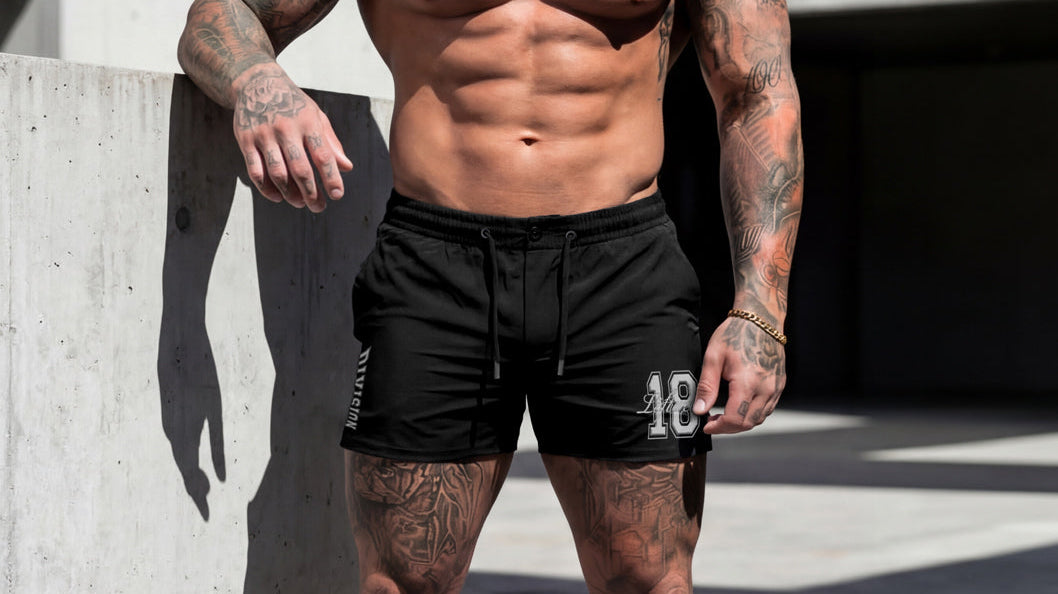
A stringer is a sleeves-off, warm-session piece, which makes it a spring and summer staple in New Zealand. On the way in, a hoodie over the top handles the cold start and comes off after the first working set. Below the waist, a shortened-length short like the 1023 Squat Crue 18 keeps the proportions tight. On days you want more coverage without losing the airflow, the 1018 Kong Heavy Lifters singlet in 150 GSM combed cotton covers the chest and shoulder while staying light, and an oversized tee from the 4018 oversized range is the pump cover for after.
Everything sleeveless we make, stringers and singlets both, sits in the tanks and singlets collection, and the wider tops range covers the layers around it.
Looking after the fit
A stringer loses its fit faster than a tee because there is less fabric to share the load. Wash it cold, inside out, no softener, and air dry it in the shade. The full routine is in the gym clothing care guide, and it applies doubly here.
FAQ
Are gym stringers comfortable to train in?
Yes, if they fit. A well-fitted stringer is the least restrictive top you can lift in because nothing sits over the shoulder joint. Discomfort almost always comes from straps that slide or a hem that rides, both of which are fit problems, not stringer problems.
Should a stringer show your sides?
Some, yes. The armholes are cut low to free the lat and show the serratus. If the opening sits above your lower pec you have bought a singlet. If it sits at your waist it is too deep for lifting and will ride up constantly.
Do stringers run small?
Ours are cut to an athletic fit at your normal tee size and are pre-shrunk, so they do not run small. The common mistake is sizing down on purpose. Take your usual size and let the taper do the work.
Can I wear a stringer outside the gym?
It is a training piece first. For street wear a singlet with full chest coverage reads better, and an oversized tee over the stringer does the job on the walk home.