



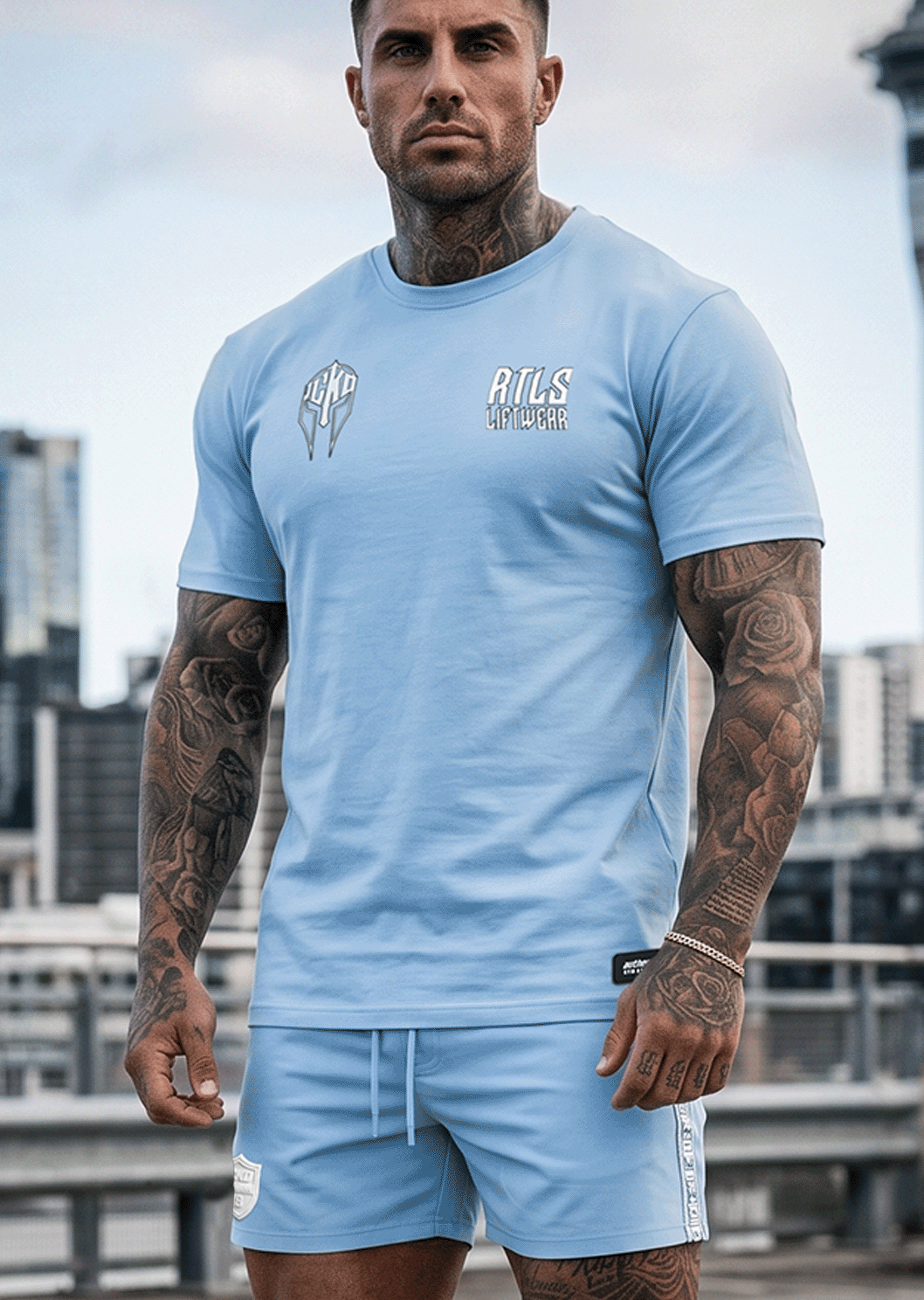
Search "gym shirts" and you get a wall of plain cotton with a logo on the chest. Most of it is a normal t-shirt sold at a gym price. The difference between a shirt that survives a year of training and one that goes baggy at the collar by week six is not the graphic. It is weight, yarn, seams and cut, and all four are printable on a spec sheet if a brand is willing to print them.
Here is what to actually look at before you buy, and how to match the shirt to the session.
A gym shirt takes four loads a normal t-shirt never sees
A training shirt fails in predictable places, and all of them trace back to the same four loads.
- Overhead rotation. Presses, pull-ups and snatches drag the shoulder seam across the joint. A seam sitting in the wrong place chafes, then splits.
- Sweat and salt. Cotton drinks it. Not a problem in itself, but the fabric has to hold its shape wet and dry back flat instead of twisting.
- Wash frequency. A gym shirt is washed after every wear. Four sessions a week is roughly 150 washes a year against maybe 20 for a casual tee.
- Getting yanked on and off with a pump. The neckline takes the whole force, and it is the number one reason cheap shirts end up as garage rags.
Every checkpoint below exists because of one of those four.
The five things worth checking
1. Weight, in GSM
GSM is grams per square metre, the single most useful number on a gym shirt. Light is not bad and heavy is not automatically better. They do different jobs.
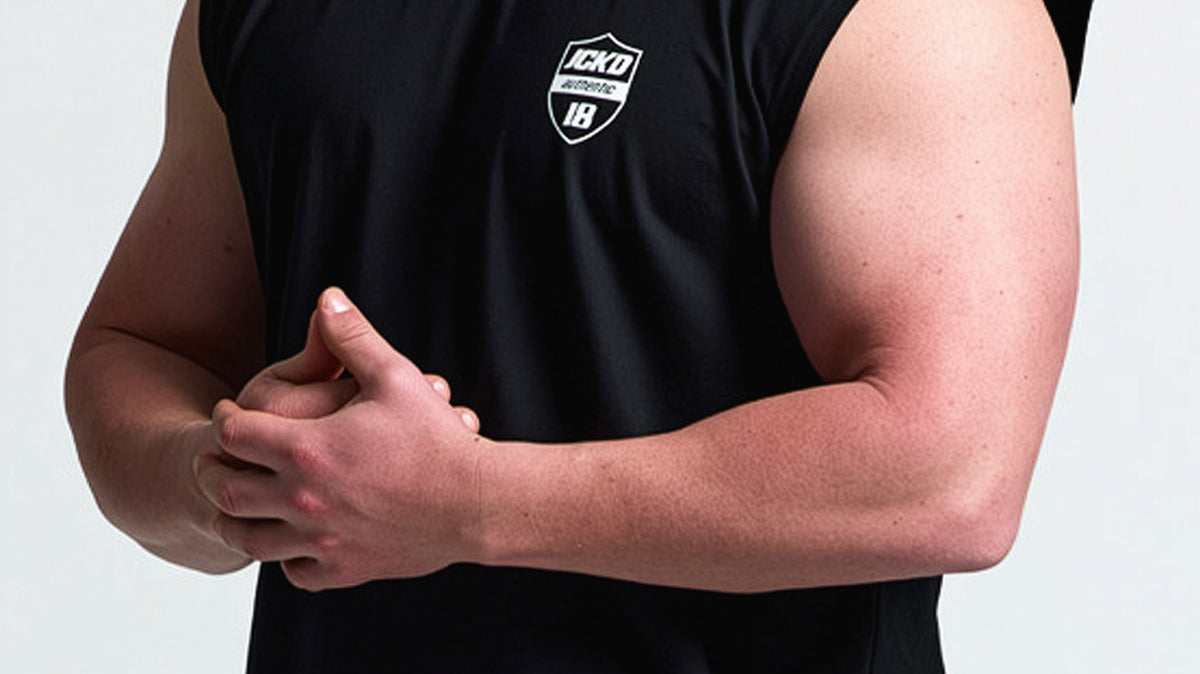
- 150 GSM and under: breathable, fast, built for heat and conditioning. Our 1018 Relentless Singlet sits here at 150 GSM, 34-singles combed cotton.
- 180 to 200 GSM: the everyday training band. Structured enough to hang properly, light enough for a full session. The 3018 DIV18 Stealth Tee is 180 GSM, 34-singles.
- 220 GSM and up: heavyweight. Holds its shape, drapes instead of clinging, reads as deliberate. The 4018 The Ark Oversize Tee is 220 GSM, 22-singles.
If a brand will not publish a GSM figure, assume the shirt is light. Nobody hides 220. We broke the full weight ladder down in what GSM means in gymwear.
2. Singles count, the number nobody explains
You will see "28-singles" or "22-singles" next to the GSM. It describes how fine the yarn is. Higher numbers mean finer yarn and a smoother, softer surface. Lower numbers mean thicker yarn and a denser, more substantial hand.
Read the two together. 220 GSM at 22-singles is heavy and structured. 180 GSM at 34-singles, like the DIV18 Stealth, is lighter but finer in the face of the fabric. Same combed cotton, two genuinely different shirts.
3. Construction, which is where the money actually goes
Four details separate a proper gym shirt from a blank:
- Shoulder-to-shoulder tape. A strip of fabric across the back of the shoulders that stops the shirt stretching sideways. Without it, overhead work slowly widens the neck.
- Side seams. Tubular shirts have none. They are cheaper to make and they twist in the wash. A side-seamed shirt keeps its shape through the body.
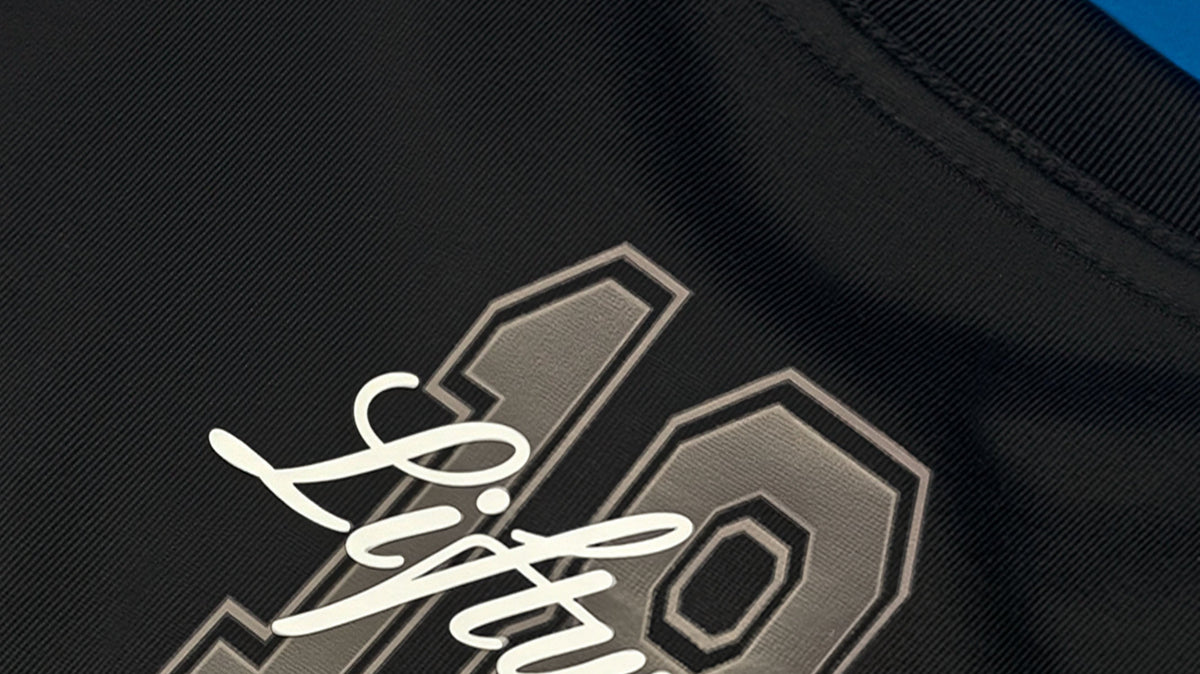
- Ribbed neckline. Rib recovers after being pulled. Flat jersey collars do not, which is exactly why they end up wavy.
- Twin-needle stitching. Two parallel rows on hems and sleeves. It is the difference between a hem that holds and a hem that unravels after a season.
Every one of those is listed on our product pages, because they are the reason a shirt costs what it costs.
4. Fit, decided by what you train
Classic fit follows the torso with set-in sleeves and a sharp shoulder line. It sits cleanly under a bar and does not bunch when you rack. The 3018 Crowned Lifter Tee is the straightforward version of this at 180 GSM, 28-singles.
Oversized is wider, boxier and shorter, with dropped shoulders. It gives you room across the back and a heavier drape, and it stacks over shorts rather than tucking. That extra fabric is the trade: more presence, slightly more to manage on machines. Full breakdown in oversized vs classic fit.
5. Pre-shrunk, or you are buying a size you will not keep
Untreated cotton can lose real length in the first few hot washes, and a gym shirt that comes up short at the hem is finished as a training piece. Pre-shrunk fabric is processed before cutting, so the size you buy is the size you keep. Every shirt we make is 100% combed cotton and pre-shrunk.
Black gym shirts, and the one thing they do not hide
Black is the default for a reason. It hides chalk and most marks, and black-on-black prints like the DIV18 Stealth add graphic detail without adding noise.
What black does not hide is fade. UV and hot washes lift the dye, and that shows as a dusty grey cast long before the fabric is worn out. The fix is boring and it works: cold wash, inside out, dry in shade. Our gym clothing care guide has the full routine, including the salt build-up behind pale patches under the arms.
Matching the shirt to the session
| Session | What works | Why |
|---|---|---|
| Heavy lower body | 180 to 200 GSM classic fit | Nothing loose to catch on a bar or belt |
| Upper body and pump work | 220 GSM oversized | Room across the back, heavier drape |
| Conditioning and summer | 150 GSM sleeveless | Airflow, no sleeve to soak through |
| Training then straight out | 220 GSM oversized | Holds structure once the session is done |
Training sleeveless changes the checks. Armhole depth, strap width and hem shape are covered in the gym tank tops guide.
Where cheap gym shirts fail first
In order, near enough every time: the collar goes wavy, the shoulder seam frays where it crosses the joint, the side seam twists so the print sits off-centre, then the hem unravels. Three of those four are construction failures, not fabric failures, which is why the seam list matters more than how soft a shirt feels in the changing room.
FAQs
What GSM should a gym shirt be?
180 to 200 GSM covers most training for most people. Drop to 150 or go sleeveless for heat and conditioning. Move to 220 when you want a shirt that holds its shape, drapes rather than clings, and still looks deliberate after the session.
Should a gym shirt be tight or loose?
Neither extreme. Tight restricts overhead range and shows every seam under load. Genuinely loose catches on bars and machines. Classic fit should follow the torso without pulling across the chest. Oversized should be wide and boxy on purpose, not simply a size too big.
Is cotton fine for gym shirts, or do I need polyester?
Cotton is fine for lifting, and it wins on skin feel and on smell over time. Polyester dries faster, which matters most for high-sweat conditioning. On strength days drying speed is rarely the limiting factor, and combed cotton at a proper weight with proper seams will outlast a cheap synthetic tee.
How many gym shirts do I actually need?
One per session in a week, plus one. Training four times means five shirts, so you are never washing under pressure and no single shirt takes the whole year of wear. Spreading the load across a rotation is the cheapest way to make good shirts last.
The short version
Check the GSM, check the singles count, check for shoulder tape, side seams, ribbed neck and twin-needle stitching, and check it is pre-shrunk. Five things, all of them printable, all of them the reason a shirt is still worth wearing twelve months in.
Classic cuts sit in 3018 Classic Rep Tees, and the heavyweight boxy cuts are in 4018 Classic Rep Oversized. Every spec above is on the product page, because you should not have to guess.