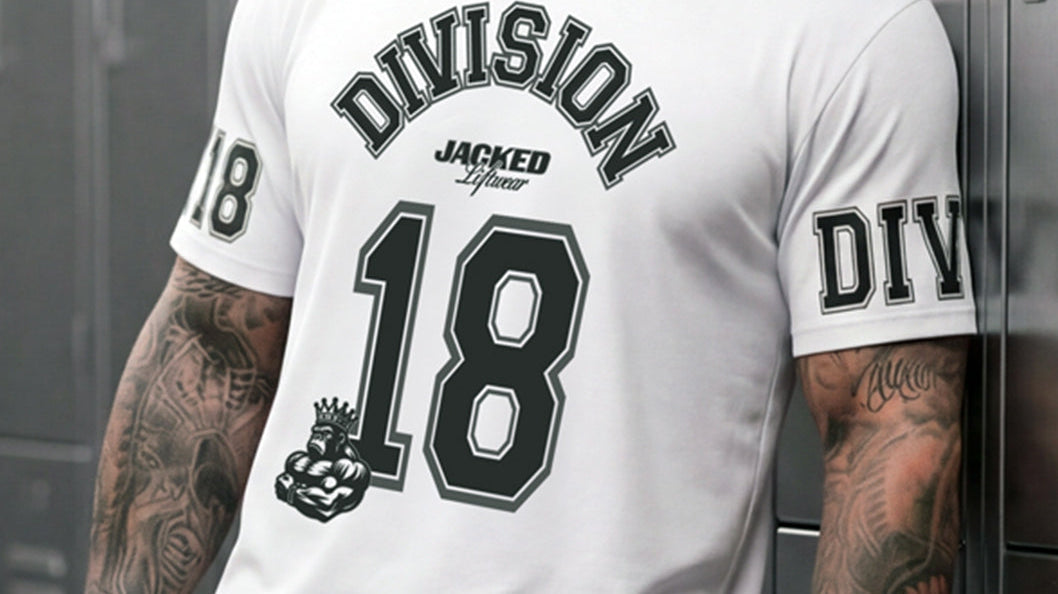




September lands, the mornings stop biting, and the sleeves come off. If you have been typing "mens gym tank tops" into a search bar and getting back a wall of thin promo-tee fabric with the arms cut out, this one is for you. A tank top is a piece of training equipment. It either lets your shoulders work and stays where you put it, or it rides up on the incline bench, gapes to the ribs and goes see-through by set three.
Here is how to judge one properly, and which weight belongs in which session.
Tank top, singlet, stringer: the words are regional
Half the confusion is language. In the US it is a tank top or a muscle tank. In New Zealand and Australia the same garment is a singlet. A stringer is the narrow-strap, deep-cut bodybuilding version, and a "muscle tee" is usually a tank with a wider strap and more chest coverage. Search for any of them and you land on the same shelf.
What actually separates them is strap width and armhole depth, not the label. If you want the full style breakdown we wrote it up in the singlets and stringers buying guide. This piece is about the build quality underneath the name.
The five things that make a gym tank top worth owning
1. Armhole depth, not armhole gape
A gym tank needs a deeper armhole than a street tank so pressing and pulling never binds at the shoulder. The failure mode is the opposite extreme: an armhole cut so low it exposes your entire ribcage every time you reach overhead. The test is simple. Press your arms straight up. If the side of the garment drops past the bottom of your pec, it is a beach tank, not a training one.
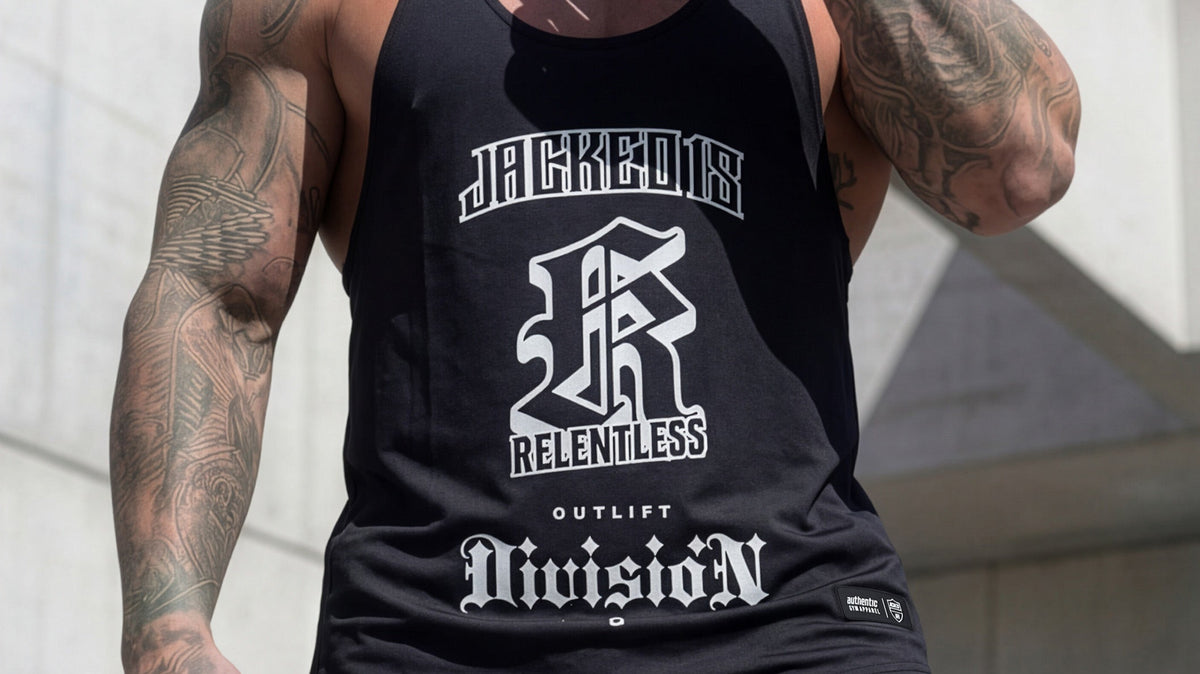
Look for a finished edge too. Our 1019 Vertical Shield Tank uses hemmed armholes, which hold the opening at the shape it was cut at. Raw or single-turned edges stretch out and start curling within a month.
2. Strap width is a training decision
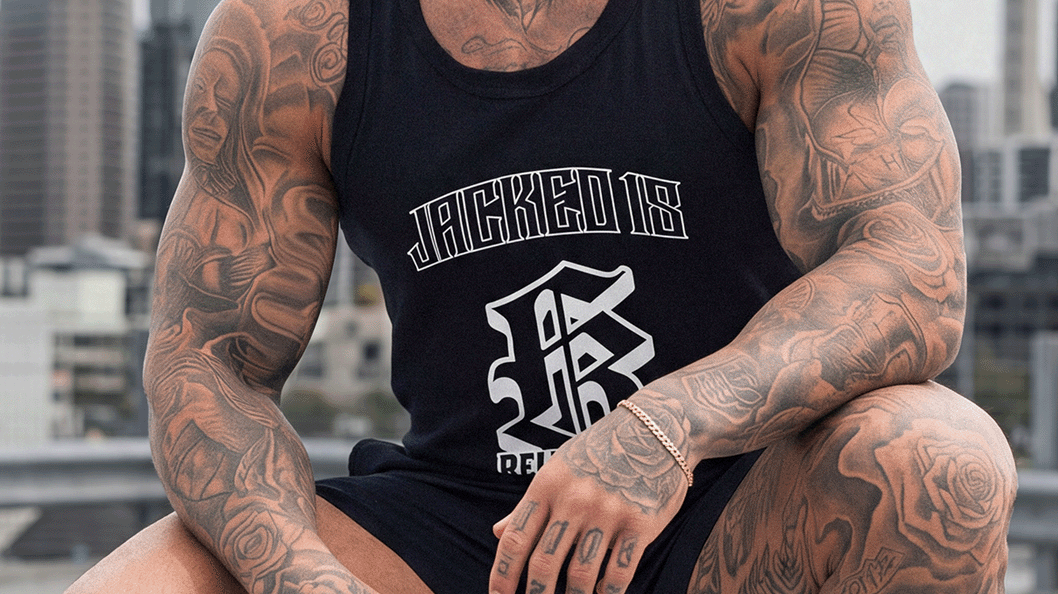
Wide straps sit clear of a barbell across your traps and keep the load on skin, not fabric. Thin straps show more delt and more upper back. Neither is better, they just suit different days. Back squats and heavy pressing favour a wider strap. Arm and shoulder work is where a stringer cut like the 1018 Relentless Stringer earns its place, with deep arm cuts, thin shoulder straps and a racerback that leaves the scapula free.
3. Body length and hem shape
Most cheap tanks are cut short and straight, so they ride up the second you hinge. You want enough length to stay put through a deadlift and a hem shaped to sit flat. A curved hem, like the one on the 1018 Relentless Singlet, drops clean at the sides rather than flaring. A straight hem with proper side seams does the same job with a boxier look.
4. Fabric weight is the whole comfort argument
This is the spec almost nobody publishes and the one that decides everything. Lightweight cotton around 150 GSM breathes and drapes. Heavier cotton around 220 GSM holds its shape, blocks light and sits structured off the shoulder instead of clinging.
Our range splits cleanly along that line. The Relentless Singlet and the 1018 Kong Heavy Lifters are both 150 GSM, 34-singles 100% combed cotton in the Flexset cut, which is the lighter, more sculpted end. The Shield Tank and the 1019 Vertical Tank are both 220 GSM, 22-singles combed cotton on the Core Cut, structured and substantial. Same garment category, genuinely different experience. If you want the full explainer on the number itself, read what GSM means in gymwear.
5. Opacity and the sweat test
Light fabric plus a light colour plus sweat is the fastest route to a tank you stop wearing. Combed cotton at a real weight holds up far better than the open, loosely spun cotton used in promotional garments, because the fibres are combed to remove the short ones before spinning. Higher singles counts give a finer, smoother yarn. Lower singles counts give a thicker, denser one. That is why 34-singles reads light and soft while 22-singles reads solid and opaque.
Which weight for which session
| Session | Cut and weight | Why |
|---|---|---|
| Heavy squats and pressing | 220 GSM tank, wider strap | Fabric sits between bar and skin, holds shape under a belt |
| Arms and delts | Stringer or 150 GSM singlet | Maximum shoulder exposure, nothing binding at the armhole |
| Hot summer conditioning | 150 GSM singlet | Lightest, most breathable, dries fastest of the cotton options |
| Gym to street | 220 GSM tank | Structured enough to read as deliberate rather than underdressed |
If you only own one, own the heavier tank. It covers more of the week and it survives more washes.
Where cheap tank tops fail first
- The neckline. An unribbed or thinly ribbed neck stretches into a wave and never recovers. Ribbed necklines and shoulder-to-shoulder tape are what stop it.
- The armhole edge. Curling within weeks is the tell that it was cut and hemmed cheaply.
- The side seam. Tubular garments with no side seams twist on the body after a few washes. Side seams keep the shape square.
- The fit after wash one. If it was not pre-shrunk, the size you bought is not the size you keep. Everything in our sleeveless range is pre-shrunk.
None of that is exotic construction. It is just the difference between a garment built for training and a blank with the sleeves removed.
Getting the size right
Short version: our sleeveless range runs true to size on a regular athletic fit, and because everything is pre-shrunk you do not need to buy big to allow for shrinkage. Stay true to size for a sculpted look, size up one for drape, size up in a stringer if you want more coverage. The full breakdown with a chest measurement table is in the gym singlet sizing guide.
Frequently asked questions
What is the difference between a tank top and a singlet?
Nothing, beyond geography. "Tank top" is the American term and "singlet" is the New Zealand and Australian one for the same sleeveless garment. A stringer is the distinct one: thinner straps and a deeper armhole cut for maximum shoulder exposure.
Are cotton tank tops good for the gym?
For lifting, yes. Cotton at a proper weight is comfortable against skin, does not hold odour the way cheap synthetics do, and looks better off the gym floor. The honest trade is drying time: cotton holds sweat longer than a technical synthetic, so for long conditioning work in real heat, a lighter 150 GSM cut is the one to reach for.
Should a gym tank top be tight or loose?
Fitted through the chest with room to move. Close enough to show the work, never close enough to restrict a rep. If you are between two sizes and undecided, take the larger one. A touch of room is easier to live with than a tank that pins your shoulders.
Can I wear a tank top in a commercial gym in NZ?
In almost all of them, yes. A handful of chains ask for fuller torso coverage, which a standard tank gives you comfortably and a deep-cut stringer may not. If your gym is strict, a 220 GSM tank with a wider strap is the safe pick.
Browse the full RTLS sleeveless collection, cut for lifters, built on premium combed cotton, shipped fast across New Zealand and Australia.